

Operator Commands,zvm101,Math News,Equations


z/vm zvm vm mainframe software zlinux zvm


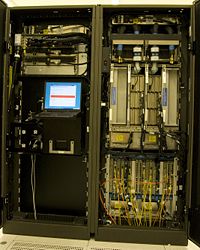
zVM VM Mainframe HMC console display

zVM101.Com

* z/VM News, Jobs, Resources    

* z/VM Products, ISVs, Solutions

* Sysprogs, Linux on z, Tools

* Mainframe Jobs, Software Jobs   

Filter= Operator-Commands


  Exact Time


        Like us:      Follow us:   


* Go To Z101.COM *


* Internet Search Results 

  *** Search Filter: "Operator-Commands"


What does <> (angle brackets) mean in MS-SQL Server?
nvl is not a SQL Server function. <> operator means not equal to in MS SQL. It compares two expressions (a comparison operator). When you compare nonnull expressions, the result is TRUE if the left operand is not equal to the right operand; otherwise, the result is FALSE.

SQL - Difference between != and <> Operator used for NOT ...
If != and <> both are the same, which one should be used in SQL queries? Here is the answer – You can use either != or <> both in your queries as both technically same but I prefer to use <> as that is SQL-92 standard. Though, many of the leading database applications supports both of the operators. For example –.

Angle Bracket <> in Java with Examples - GeeksforGeeks
It means that the angle bracket takes a generic type, say T, in the definition and any class as a parameter during the calling. The idea is to allow type (Integer, String, … etc and user-defined types) to be a parameter to methods, classes, and interfaces.

Bracket (mathematics) - Wikipedia
In e-mail and other ASCII text, it is common to use the less-than (<) and greater-than (>) signs to represent angle brackets, because ASCII does not include angle brackets.

Coding Symbols & Brackets Glossary | Programming Reference
Comprehensive searchable glossary of coding symbols, brackets, and operators with correct English names. Learn the proper terminology for parentheses, braces, chevrons, and more.

What Is the Java Diamond Operator? Should You Use It for ...
The diamond operator (<>) is a syntactic sugar introduced in Java 7 to simplify the initialization of generic classes. Generics in Java (e.g., ArrayList, HashMap) enforce type safety by allowing you to specify the type of objects a collection will hold.

Operators (Transact-SQL) - SQL Server | Microsoft Learn
An operator is a symbol specifying an action that is performed on one or more expressions. The following table lists the operator categories that the SQL Server Database Engine uses.

SQL Operators: The Complete Guide | Database Star: Home
Using <>, which is a combination of greater than and less than. Together, these symbols mean not equal to. It could look like this: Which one should you use? I would recommend using the two bracket version <>, because it's ANSI-compliant, which means it's part of the SQL standard.

Angle Brackets operator - revelation.com
< > Angle Brackets operator < > Angle Brackets operator

What is the SQL operator name for "<>"? - Stack Overflow
When you use <>, I believe the engine scans/seeks all values that are greater than or less than. When we use !=, it simply goes for all values that don't equal what you defined. We've seen performance gains from 30 mins to 3 mins on several of our procedures here.


  FIRE101 Jobs: 

  FIREMEN, EMS, Emergency, Rescue

  POLICE101 Jobs:

   Cops,Officers,Security

  Mainframe IT Jobs:

   z/OS, z/VM, DB2, COBOL,QA,INTERNs

  Software Jobs:

   Web, Linux, C++, Java, INTERNs

  Finance Jobs:

   Accounting, INTERNS, Brokers, Invest

  Legal, Lawyer Jobs:

   Paralegals, INTERNs,Law Firms

  Medical, Nurse Jobs:

   Doctors, INTERNs, Nurses, ER

  Genetic, Science Jobs

   Genetics, Research, INTERNs, Labwork

* Latest zVM Mainframe News

       *** News Filter: "Operator-Commands"


ZVM101.COM --- z/VM News, z/VM Software, Linux on System z, Linux, z/OS Jobs, System Programmers, ...

 * Contact us:  Support@Z101.com

Copyright 2007-2025  ZVM101.COM